


Guide / Materials & board grades / Chapter 3.9
Paper vs plastic mailers.
Paper mailers are popular with brands moving away from plastic, but plastic satchels still have real strengths. Here's an honest comparison to help you choose.
The short answer
Plastic courier satchels are light, tough and water resistant, and some are made with recycled plastic. Paper mailer bags are made from paper, look natural and suit brands that want to avoid plastic, but they're heavier and need to be kept dry. Padded paper mailers use honeycomb paper or corrugated board for cushioning instead of bubble wrap. Choose based on what you send, how it travels and what your customers expect.
What we offer
Plastic satchels
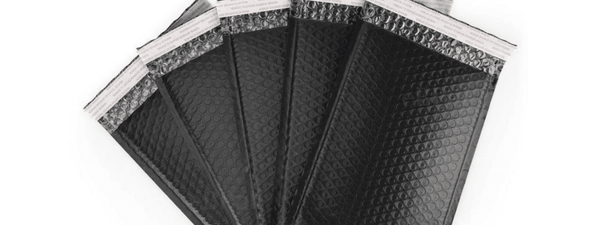
Our courier satchels include white, black and pink poly mailers made from 60 micron polyethylene with a dark inner lining, and satchels made with 80% recycled plastic. They're light, water resistant and self-sealing.
Paper mailers
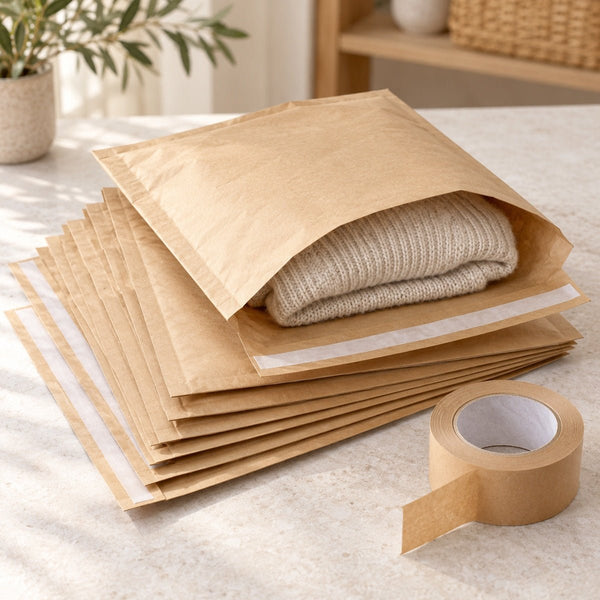
Our paper mailer bags include kraft paper mailers for soft goods and documents, corrugated padded mailers, and honeycomb paper padded mailers that cushion small items without plastic bubble wrap.
Bubble mailers
Our poly bubble mailers have a bubble lining for light protection and a water resistant outer.
Paper vs plastic at a glance
General differences. Specific products vary, so check each product's details.
| Plastic satchel | Paper mailer bag | |
|---|---|---|
| Weight | Very light | Heavier for the same size |
| Water resistance | Good | Keep dry |
| Tear and puncture resistance | Good | Good when made from strong paper |
| Look and feel | Smooth, glossy or matt | Natural, textured kraft |
| Printing | Printed satchels available | Printed paper mailers available |
| Disposal | Check local guidance for soft plastics | Paper can usually go in paper recycling; check local guidance |
How to choose
- For clothing and soft goods, both work. Plastic satchels are lighter and handle wet weather; paper mailers suit brands moving away from plastic. If you plan to call your packaging plastic-free, check the adhesive strip, release liner, coatings and any labels too.
- For small items that need cushioning, compare bubble mailers with honeycomb paper padded mailers.
- For flat items and documents, a rigid or padded paper mailer, or a flexible mailer with a backing board, protects against bending better than thin plastic. A plain flexible paper bag on its own won't stop bending.
- For fragile or rigid items, use a box. Neither mailer protects against crushing.
Whichever you choose, keep claims about it accurate. Describe what's true, such as "made from paper" or "made with recycled plastic", and tell customers how to dispose of it.
What it means for you
The same question, answered for where your business is today.
Choose your stage at the top of the page to open the advice for you.
Start-up · under 100 units
Choose the mailer that suits your products and brand, and keep two or three sizes. If you're unsure, try both with a few real orders.
Ask customers what they think. Packaging preferences vary a lot between audiences.
Growing · 100 to 2,499 units
If you're moving to paper, check the extra weight and size against your postage. A small change per parcel adds up over many orders.
Try this: weigh a typical order packed in each mailer and compare postage.
Enterprise · 2,500 units and more
Specify the mailer material and size for each product, and keep the disposal message consistent across your packaging and website.
Track damage and returns by mailer type before switching your whole range.
Common mistakes
- 1Assuming paper is always the better choice. Paper is heavier and less water resistant. The right choice depends on what you send.
- 2Using paper mailers in wet conditions. Paper can weaken when wet. Consider plastic for items that must stay dry.
- 3Making broad eco claims. Describe the material accurately rather than calling it "eco" or "green".
- 4Using any mailer for fragile items. Neither paper nor plastic mailers protect against crushing. Use a box.
Paper and plastic mailer questions
Are paper mailers better than plastic?
Are your plastic satchels recycled?
Can paper mailers get wet?
What's a honeycomb paper padded mailer?
Can I get paper or plastic mailers printed?

From our customers
ROHU KidsCustom paper mailer bags, digitally printed with a deer design that children can colour in.
Read their story →Keep reading
Shop mailers

Paper or plastic?
Tell us what you send and how it travels. Our Melbourne team will recommend the mailer that suits it, usually within 1 business day.