


Guide / Sustainability & rules / Chapter 8.1
Recyclable, compostable and biodegradable, explained.
Three words that sound similar and mean very different things. Here's what each one actually means for packaging in Australia, and how to choose and describe your packaging honestly.
The short answer
Recyclable means the packaging can be collected, sorted and made into new material through systems that actually exist, such as kerbside recycling. Compostable means it breaks down into compost under set conditions: industrially compostable packaging needs a commercial composting facility, while home compostable packaging is designed for a home compost bin. Biodegradable only means something breaks down eventually, with no set time or conditions, so on its own it tells your customer very little. For most cardboard and paper packaging, recyclable is the simplest and most useful option.
Recyclable
A pack is only recyclable in practice if your customer can put it in a collection system that accepts it, and that system can sort and reprocess it. Clean cardboard boxes are widely accepted in kerbside recycling across Australia, but not every paper item is. Tissue paper, for example, isn't accepted by every council, so give component-by-component instructions and tell customers to check their council's list. Soft plastics, such as satchels and plastic film, are not accepted in most kerbside bins and generally need a separate collection point where one is available.
The Australian Competition and Consumer Commission (ACCC) notes that customers are likely to assume the facilities exist to recycle something described as recyclable. If recycling depends on a special drop-off or a particular area, say so.
Compostable: home or industrial
Industrially (commercially) compostable
Designed to break down in a commercial composting facility, which runs hotter and more controlled than a home bin. The Australian Standard for this is AS 4736. These items should not go in a home compost bin, and many councils don't accept them in garden or food organics bins either.
Home compostable
Designed to break down in a well-managed home compost bin. The Australian Standard for this is AS 5810. The City of Greater Geelong explains that, under test conditions, AS 5810 products need to biodegrade within a year, and may take longer in a real home bin.
What councils accept varies
Whether compostable packaging can go in a council food and garden organics bin depends on the council and the state. For example, the City of Greater Geelong says the Victorian Government will stop accepting compostable packaging in green bins from 2027. Always check the local rules before telling customers which bin to use.
Biodegradable
Whether and how fast a material breaks down depends on the material and the conditions it ends up in, such as heat, moisture and microbes, and a claim needs evidence for those conditions. Without a time frame and conditions, "biodegradable" doesn't tell your customer how or where to dispose of the packaging. The ACCC's guide, Making environmental claims, gives an example of a biodegradability claim that was likely to mislead because it implied home composting results the evidence didn't support. Some states have also banned degradable plastics. If you want to talk about end of life, recyclable or certified compostable is clearer.
The three terms at a glance
These are general explanations. Check local council rules and the ACCC's guidance before making claims.
| Term | What it means | Where it goes | Watch out for |
|---|---|---|---|
| Recyclable | Can be collected, sorted and remade into new material | Kerbside recycling, or a collection point for some materials | Soft plastics usually need a separate collection point |
| Industrially compostable (AS 4736) | Breaks down in a commercial composting facility | A commercial composting service | Not suitable for home compost, and many councils don't accept it |
| Home compostable (AS 5810) | Breaks down in a home compost bin | A home compost bin | Takes longer in real conditions than in a test |
| Biodegradable | Breaks down at some point, under some conditions | Unclear | Too vague to guide customers on its own |
What it means for you
The same question, answered for where your business is today.
Choose your stage at the top of the page to open the advice for you.
Start-up · under 100 units
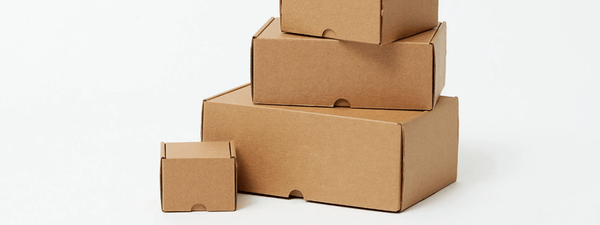
Keep it simple. Cardboard boxes and paper tape are widely accepted in kerbside recycling, but some items, such as tissue paper, aren't accepted by every council. Tell customers which bin each part goes in, and to check their council's list.
Avoid describing packaging as "eco-friendly" without saying why. Be specific instead.
Growing · 100 to 2,499 units
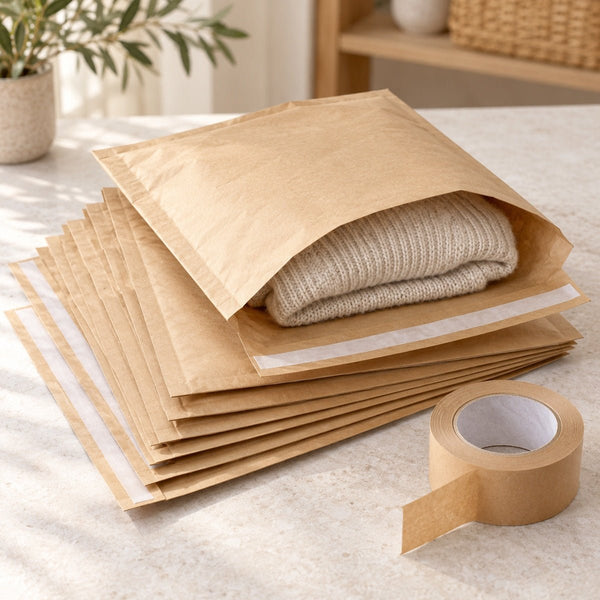
Check every part of your pack, not just the box. A recyclable box with plastic tape, plastic filler and a plastic insert is harder to recycle.
Try this: list each component of a typical order and note where your customer should put it.
Enterprise · 2,500 units and more
Base every claim on evidence, and keep it on file. If you use compostable packaging, check that your customers have access to the right facilities before you rely on it.
The Australasian Recycling Label program can assess your packaging and give on-pack disposal instructions.
Common mistakes
- 1Calling packaging "biodegradable". It's vague and can mislead. Say what the packaging is made of and how to dispose of it.
- 2Assuming compostable is always better. Industrially compostable packaging often ends up in landfill if customers can't access a commercial service.
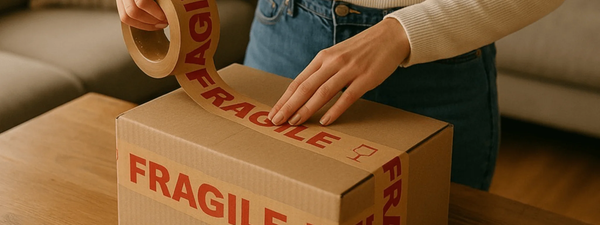
- 3Forgetting the small parts. Plastic tape, labels and filler can make an otherwise recyclable pack harder to recycle.
- 4Mixing materials. Paper laminated to plastic can be hard to separate. Choose single materials where you can.
- 5Overclaiming. Words like "eco-friendly" or "sustainable" need to be backed up and explained.
Recyclable and compostable questions
What's the difference between recyclable and compostable?
Is biodegradable the same as compostable?
Can compostable packaging go in my green bin?
Is cardboard recyclable?
How should I describe my packaging to customers?

From our customers
PaperlustNo plastic in their shipping, including wrap and fill. Plastic-free and recyclable aren't the same thing, so check each part against your customers' council rules.
Read their story →Keep reading
Easy-to-recycle packaging
Want packaging that's easier to recycle?
Tell us what you're packing and how it ships. Our Melbourne packaging team will suggest simple, easy-to-recycle options, usually within 1 business day.