


Guide / Sustainability & rules / Chapter 8.2
The Australasian Recycling Label (ARL).
The small recycling symbols on Australian packaging tell customers exactly which bin each part goes in. Here's how the label works, who can use it and whether your business needs it.
The short answer
The Australasian Recycling Label (ARL) is an on-pack label that shows customers how to dispose of each separate part of a pack, for example "box: recycle" and "film: check locally". It's run by the Australian Packaging Covenant Organisation (APCO). To use it, a business joins the ARL program and assesses its packaging using an online tool called PREP, which works out the correct label for each component. As at October 2026, APCO doesn't describe the ARL as compulsory on all packaging, but there are specific rules for businesses that use it.
General information as at October 2026, not legal advice. Check the linked official sources for current rules.
How the label works
The ARL breaks a pack into its separable components, such as the box, the tray, the film or the lid, and gives each one its own instruction. That way, a customer holding a box with a plastic window knows which part goes where.
APCO describes the label as "an on-pack label that provides clear and simple instructions about how to recycle all of the separable packaging components". The label is based on whether packaging can actually be recycled in Australian and New Zealand kerbside or approved drop-off systems, not simply on what it's made of.
The main labels you'll see
Recyclable
The component can go in kerbside recycling.
Conditionally recyclable
The component can be recycled if the customer follows an instruction, such as removing a lid or emptying the contents.
Not recyclable
The component should go in the general waste bin. APCO says packaging that doesn't meet its soft plastics thresholds must use the Not Recyclable label.
Check locally
For soft plastics and other materials that APCO classifies as "less widely accepted". It isn't a generic fallback: for other materials, APCO's threshold is that 60–80% of the Australian kerbside population has access to a council collection, and the logo is applied through the program's style guide. Customers are directed to check what their local service accepts.
How a business gets the ARL
A summary of the process described by APCO. Check APCO's website for current requirements, fees and membership details.
| Step | What happens |
|---|---|
| 1. Join the program | Businesses join APCO's ARL program as members. |
| 2. Assess the packaging | Each pack is assessed in PREP (the Packaging Recyclability Evaluation Portal), which checks recyclability in Australian and New Zealand systems. |
| 3. Get the label | PREP's result determines the correct label for each component. |
| 4. Apply and keep it current | Artwork is updated with the label, and specifications are kept accurate when packaging changes. |
Keeping labels up to date
Recycling systems change, so labels can change too. APCO says organisations were required to confirm their packaging specifications and update packaging with the accurate ARL by 1 July 2025 for packaging labelled before 14 July 2023. For some materials that are less widely accepted, APCO recommends moving to the newer Check Locally logo at the next artwork change.
If you use the ARL, build a label check into every packaging redesign.
What it means for you
The same question, answered for where your business is today.
Choose your stage at the top of the page to open the advice for you.
Start-up · under 100 units
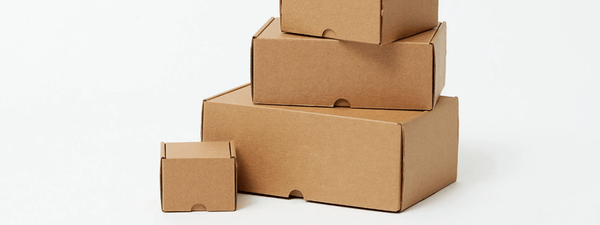
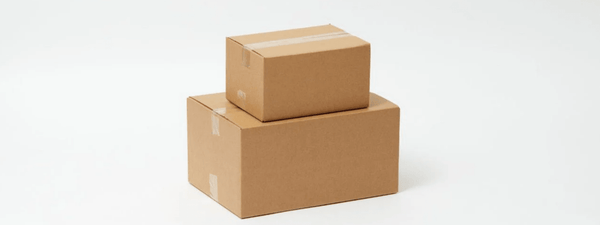
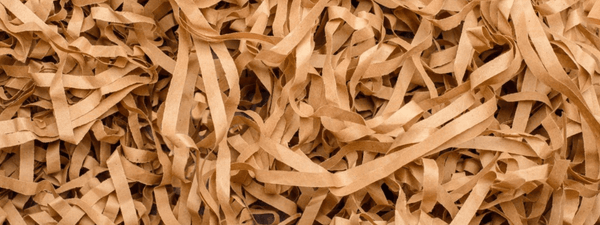
Whether you need the ARL depends on your obligations and any retailer requirements, not on how many units you order, so check both. Either way, choose packaging that's easy to recycle, such as cardboard boxes and paper filling, and tell customers in plain words which bin it goes in.
Don't copy the ARL symbols onto your packaging without being a program member and assessing your packaging.
Growing · 100 to 2,499 units
If you sell through retailers, or your packaging uses several materials, ask whether the ARL is expected in your market. Designing packs with fewer, separable materials makes labelling simpler.
Try this: list each component of your pack and the material it's made of. That's the starting point for any assessment.
Enterprise · 2,500 units and more
At scale, the ARL gives customers consistent instructions across your range. Assess packs in PREP, keep specifications current and update labels at each artwork change.
Combine ARL work with your packaging specifications, so any material change triggers a label check.
Common mistakes
- 1Using the symbol without assessment. The ARL is based on a PREP assessment. Applying it without one can mislead customers.
- 2Labelling the whole pack, not the parts. The ARL works component by component. A box and its film often have different instructions.
- 3Forgetting to update. A material or design change can change the correct label.
- 4Assuming paper means recyclable. Coatings, laminates and food residue can affect recyclability. Let the assessment decide.
Australasian Recycling Label questions
What is the Australasian Recycling Label?
Is the ARL mandatory?
How do I get the ARL for my packaging?
What does "check locally" mean?
Can PackQueen put the ARL on my custom packaging?
Keep reading
Simple, single-material packaging
Planning custom packaging with recycling labels?
Send us your artwork and labelling requirements. Our Melbourne team will help you set up the print, and send a digital proof within 1 business day of receiving your artwork.