


Guide / Sustainability & rules / Chapter 8.8
Talking about sustainability honestly.
Customers care about packaging, and the ACCC is watching how businesses describe it. Here's how to talk about your packaging accurately, using the ACCC's own principles, so your claims build trust instead of risk.
The short answer
Be specific, accurate and able to prove it. Say exactly what your packaging is made of and how to dispose of it, rather than using broad words like "eco-friendly" or "sustainable". The Australian Competition and Consumer Commission (ACCC) has published eight principles for environmental claims, and they're a useful checklist for every box, website and social post. This chapter is general information as at October 2026, not legal advice.
The ACCC's eight principles
The principle headings as published by the ACCC, with what they mean for packaging.
| ACCC principle | What it means for your packaging |
|---|---|
| Make accurate and truthful claims | Only say what's true of your actual packaging. |
| Have evidence to back up your claims | Keep supplier confirmations, test results and certificates on file. |
| Don't hide important information | If only part of the pack is recyclable, say which part. |
| Explain any conditions on claims | For example, "recyclable via soft plastics collection points where available". |
| Avoid broad and unqualified claims | Replace "eco-friendly" with a specific fact. |
| Use clear and easy to understand language | Plain words your customers understand. |
| Visual elements shouldn't give the wrong impression | Leaves, globes and recycling symbols can imply claims you can't support. |
| Be direct and open about sustainability transition | If you're improving over time, say what you've done and what's next. |
Words to use carefully
"Eco-friendly", "green" and "sustainable"
The ACCC describes "green" as vague, and says "eco-friendly" risks suggesting no environmental harm at all, noting that "few, if any, products can truthfully make this claim". It calls "sustainable" overly general. Replace these words with a specific fact.
"Recyclable"
The ACCC's guide, Making environmental claims, says customers are likely to assume the facilities exist to recycle a product described as recyclable. If recycling depends on a drop-off point or a particular area, say so.
"Compostable" and "biodegradable"
The ACCC's guide warns against describing a product certified only for industrial composting as compostable without explanation, and notes that what one council accepts in its organics bin, another may not. "Biodegradable" on its own rarely helps customers. See our chapter on recyclable and compostable packaging.
"Recycled content"
Customers may take recycled content to mean the material has had a previous life. Be clear about how much recycled content there is and, where relevant, what kind.
Logos and symbols
The ACCC says a certification logo shouldn't imply broader certification than you hold. Only use third-party logos, such as FSC, if you're entitled to.
Better ways to say it
- Instead of "eco-friendly packaging", try "our boxes are cardboard and can go in most kerbside recycling bins; please check your council's list". Mention any parts that need different handling, such as coatings, plastic windows or tape, and keep them clean of food.
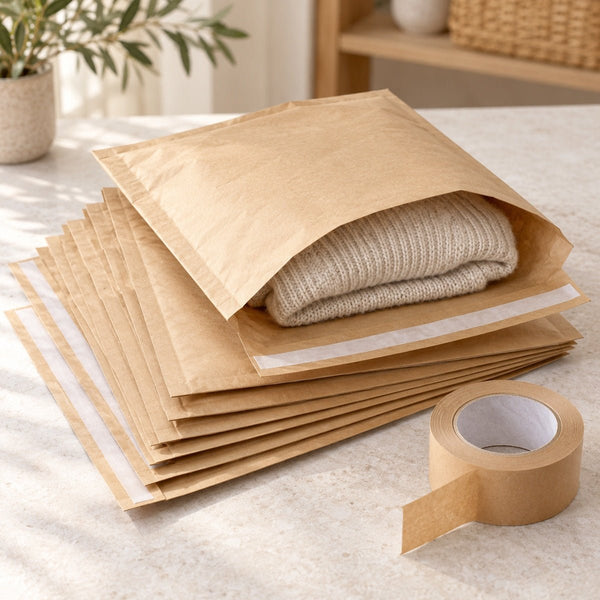
- Instead of "sustainable materials", try "our mailers are made from paper, with no plastic", if that's true.
- Instead of a recycling symbol on everything, try a short line telling customers which bin each part goes in.
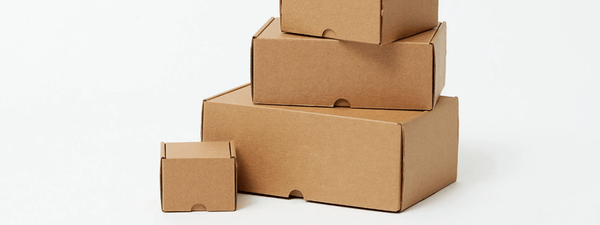
- When describing PackQueen corrugated cardboard boxes, you can say the cardboard contains at least 60% recycled content. Don't extend this to paperboard, rigid boxes, bags or accessories. FSC claims on your own packaging need a certified supply chain, so check FSC's rules before mentioning FSC.
What it means for you
The same question, answered for where your business is today.
Choose your stage at the top of the page to open the advice for you.
Start-up · under 100 units
Keep your claims short and factual. One clear sentence about what your packaging is made of and where it goes is better than a row of green buzzwords.
Before you post a claim, ask: could I show proof of this if a customer asked?
Growing · 100 to 2,499 units
Review your website, product pages and packaging for vague words and symbols. Replace them with specific facts and keep the evidence on file.
Try this: search your website for "eco", "green", "sustainable" and "biodegradable", and check each one against the ACCC principles.
Enterprise · 2,500 units and more
Set up an approval step for any environmental claim on packaging or marketing, with evidence stored centrally. Review claims whenever materials, suppliers or recycling systems change.
Align claims with any recycling labels you use, so the pack and the website say the same thing.
Common mistakes
- 1Broad, vague claims. "Eco-friendly" and "sustainable" without explanation can mislead.
- 2Claims about the whole pack. If the box is recyclable but the insert isn't, say so.
- 3Borrowed logos. Using a certification logo you're not entitled to use can mislead customers.
- 4Out-of-date claims. Materials and recycling systems change. Review claims regularly.
- 5Overstating small steps. Be proud of improvements, but describe them accurately.
Green claim questions
What is greenwashing?
Can I call my packaging eco-friendly?
What evidence should I keep?
What can I say about PackQueen cardboard?
Is this legal advice?
Keep reading
Packaging that's easy to describe
Want packaging you can describe with confidence?
Ask our Melbourne team what we can confirm about the materials in any of our packaging, usually within 1 business day.