


Guide / Box & packaging styles / Chapter 2.23
Courier satchels and mailer bags.
For soft, unbreakable products, a satchel or mailer bag is often the lightest, quickest and most affordable way to ship. Here's how the main types compare and which one suits what you sell.
The short answer
Courier satchels are lightweight plastic bags with a self-seal strip, ideal for clothing, textiles and other soft goods. Padded mailers add bubble or honeycomb cushioning for small items that need a little protection. Paper mailer bags are a paper-based alternative to plastic for soft goods and flat items. None of them protect against crushing the way a box does, so fragile and rigid products still belong in a box.
The main types
Plastic courier satchels
Light, tough and water-resistant, with a peel-and-seal strip so they close in seconds. Our courier satchels include poly mailers in 60 micron polyethylene with a dark inner lining so the contents can't be seen, and specific satchels made with 80% recycled plastic, as listed on those products.
Padded mailers
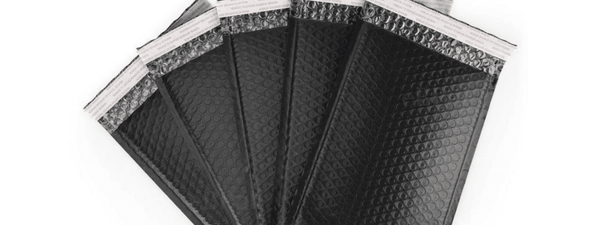
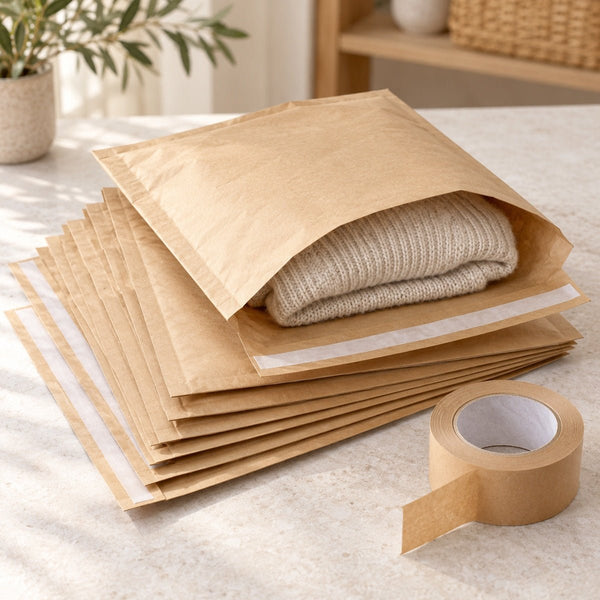
A satchel or envelope with cushioning inside. Poly bubble mailers have a bubble lining, and paper padded mailers use honeycomb paper or corrugated board as the cushioning. They suit small accessories, jewellery, cosmetics and other small items that need some padding.
Paper mailer bags
Strong kraft paper bags with a self-seal closure, for soft goods, documents and flat items. Paper mailer bags are a popular choice for brands moving away from plastic.
Which mailer suits what
| Type | Best for | Protection | Water resistance |
|---|---|---|---|
| Plastic courier satchel | Clothing, textiles, soft goods | Low, no crush protection | Good |
| Poly bubble mailer | Small items, accessories, cosmetics | Light cushioning | Good |
| Paper padded mailer | Small items, books, prints | Light cushioning | Keep dry |
| Paper mailer bag | Soft goods, documents, flat items | Low | Keep dry |
Satchel or box?
Satchels are lighter and smaller than boxes, which can lower postage, especially for light parcels where cubic weight matters. They also take up less storage space.
Boxes protect against crushing and present better. If your product can break, bend or dent, or if the unboxing matters to your brand, a mailer box is usually worth it.
What it means for you
The same question, answered for where your business is today.
Choose your stage at the top of the page to open the advice for you.
Start-up · under 100 units
For clothing and soft goods, a stock satchel in two or three sizes is often all you need. Add a sticker or a card inside to make it feel like your brand.
Fold a typical order and test which size fits without forcing the seal.
Growing · 100 to 2,499 units
If satchels are your main packaging, printed satchels make every parcel recognisable. Our custom printed satchels start from 100 units, per the product page.
Try this: compare damage and return rates for items sent in satchels and in boxes.
Enterprise · 2,500 units and more
Standardise satchel sizes across your range and specify the material, so every warehouse uses the same ones. At volume, the size you choose affects postage on every order.
Check satchel sizes against your carrier's pricing bands.
Common mistakes
- 1Using a satchel for fragile items. Satchels don't protect against crushing. Anything breakable needs a box and cushioning.
- 2Overfilling. A stretched satchel can split, and the bulge can push it into a higher postage size.
- 3Choosing too big. A loose satchel lets items shift and wastes material. Choose the closest size.
- 4Paper in wet weather. Paper mailers aren't water-resistant like plastic. Consider plastic satchels for items that must stay dry.
Satchel and mailer bag questions
What is a courier satchel?
Are satchels cheaper than boxes?
What should I use for small fragile items?
Do you have paper alternatives to plastic mailers?
Can I get satchels printed with my logo?

From our customers
ROHU KidsCustom paper mailer bags, digitally printed with a deer design that children can colour in.
Read their story →Keep reading
Shop satchels and mailers

Not sure whether to use a satchel or a box?
Tell us what you sell and how it ships. Our Melbourne team will recommend the lightest packaging that still protects it, usually within 1 business day.