


Guide / Materials & board grades / Chapter 3.1
Corrugated board and flute types, explained.
Why some boxes crush and others survive a courier depot. How to read a flute, which one suits your product, and when it's worth stepping up to double wall.
The short answer
Most mailer and product boxes use E flute because it's thin, strong for its weight and prints cleanly. Everyday shipping cartons use B or C flute. Heavy or stacked loads often call for BC double wall. Choose by what's inside, how it's handled and testing with your real load, not by how thick the box feels.
What corrugated board is
Corrugated board is a sandwich: two flat paper liners with a wavy layer glued between them. That wavy layer is the flute, and it's what gives a box its strength. It works like a row of arches, spreading weight and cushioning knocks.
Change the height of those arches and you change the board. Taller flutes give more cushioning and, with similar liners, usually more stacking strength. Shorter flutes are thinner, fold more neatly and give a smoother surface to print on.
Our corrugated cardboard contains at least 60% recycled content, and we use FSC certified cardboard from local board suppliers.
The four flutes you'll meet
Which flute does what
E flute
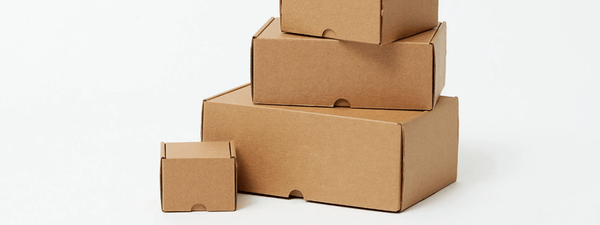
The thinnest of the four. E flute is the go-to for die-cut mailer boxes and product boxes because it folds crisply, looks neat and gives the smoothest surface for printing. It suits light to medium products that travel inside a courier network, not on the bottom of a heavy stack.
B flute
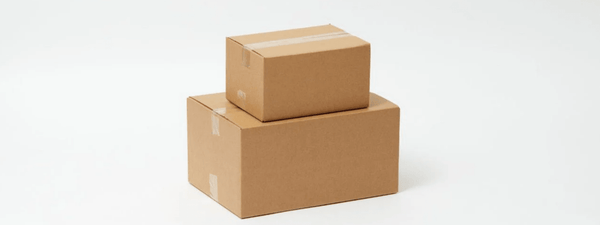
A thicker, tougher everyday board. B flute is common for shipping cartons holding moderate weights. It resists crushing better than E flute while staying easy to fold and tape.
C flute
Taller again, with more cushioning and, with similar liners, better stacking strength. C flute suits cartons that are stacked in storage or on a pallet, and heavier contents that need a little more give.
BC double wall
Two layers of flute (one B, one C) between three liners. Double wall is a common choice for heavy goods, removals and cartons stacked high. For fragile items, choose the board by the load and test it, rather than by distance alone. For heavy items, see our super strong boxes and packing boxes, and check the board listed on each product.
What it means for you
The same question, answered for where your business is today.
Choose your stage at the top of the page to open the advice for you.
Start-up · under 100 units
Stick with stock boxes. Our standard mailers and cartons are already made in the flute that suits their size, so you don't need to choose a board yet. Put your budget into labels and a good unboxing instead.
If something arrives damaged, tell us what it was and how it was packed. The fix is often better filler, not a heavier box.
Growing · 100 to 2,499 units
This is when board choice starts to save money. If your products are light, E flute mailers print beautifully and are light to ship. If customers report crushed boxes, try B flute before adding more void fill.
Try this: order samples in two flutes and send one of each to yourself through your usual courier.
Enterprise · 2,500 units and more
Write the flute, product code and agreed tolerances into your packaging specification so every order is consistent. For stacked or palletised freight, test with your real load, and check whether double wall outer cartons let you remove inner packaging.
Board choice affects freight weight on every shipment, so small changes add up at volume.
Side-by-side comparison
| Flute | Thickness | Best for | Printing | Strength |
|---|---|---|---|---|
| E | about 1.5 mm | Mailer and product boxes | Excellent, smooth surface | Light to medium items |
| B | about 3 mm | Everyday shipping cartons | Good | Medium items |
| C | about 4 mm | Stacked and heavier cartons | Fair | Medium to heavy items |
| BC | about 7 mm | Heavy goods, moving, freight | Fair | Heavy and stacked loads |
Common mistakes
- 1Choosing by thickness alone. A thicker box isn't always stronger in the way you need. Crush resistance, stacking strength and the quality of the liners all play a part.
- 2Forgetting board adds to the size. Board thickness changes the inside of the box. Always give us your product's size, not the box size you think you need. Our box size finder helps.
- 3Using double wall everywhere. Heavier board adds weight to every shipment. Test first. A better-fitting box or the right filler often fixes damage for less.
- 4Ignoring how the box travels. A box that survives a hand delivery may not survive a courier network or a pallet. Think about the whole journey.
Flute and board questions
Which flute is best for mailer boxes?
What does BC flute mean?
Is thicker cardboard always stronger?
Which flutes does PackQueen offer?
Does flute change the size of my box?
Keep reading
Shop the boxes

Not sure which board you need?
Send us your product's size and weight and how it travels. Our Melbourne packaging team will recommend the right board, usually within 1 business day.