


Guide / Shipping & protection / Chapter 7.1
Void fill compared.
Empty space in a box is where damage happens. Here's how the main types of void fill compare, which one suits your products, and how to use less of it.
The short answer
Void fill is anything that fills the empty space around a product so it can't move. Paper void fill and honeycomb paper suit most everyday shipping and are made from paper. Bubble wrap gives good cushioning for fragile items, depending on its grade and how it's used. Shredded paper looks good in gift boxes and hampers but cushions less. The best void fill is the one you need least of, so start with a box that fits.
Why void fill matters
A product that can move inside its box builds up speed with every bump, then hits the wall. Gap fill stops that movement. Cushioning, such as bubble wrap or honeycomb paper wrapped around the item, absorbs the force of knocks. Fragile items usually need both.
Void fill is not a fix for the wrong box. If you need a lot of it, a better-fitting box will usually protect better and cost less to send.
The main types
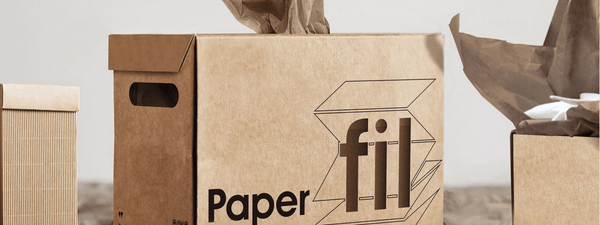
Paper void fill
Kraft paper on a roll that you scrunch into the box or feed through a dispenser. It's quick, fills large gaps and blocks movement well. Our paper void fill comes in a 380 mm wide roll with a dispenser box option, and manual and semi-automatic machines for busy packing benches.
Honeycomb paper
Kraft paper that's die-cut so it stretches into a honeycomb pattern when you pull it. You wrap it around products as a paper alternative to bubble wrap. Our honeycomb paper comes in kraft brown, white and black.
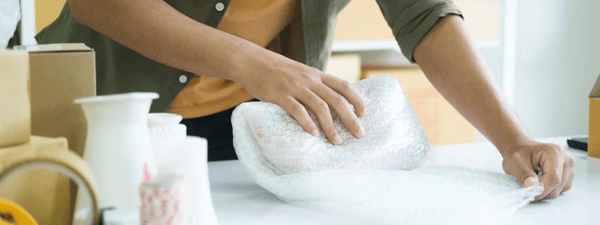
Bubble wrap
Air bubbles in plastic film, which cushion fragile and heavy items well. How well depends on the bubble size, the number of layers and the weight of the item. Our bubble wrap includes an industrial 500 mm × 100 m roll with 10 mm bubbles, plus dispenser frames.
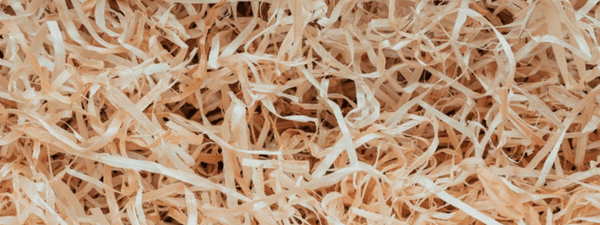
Shredded paper
Thin strips of paper, usually used for presentation in gift boxes and hampers. It looks good and holds small items in place, but it compresses, so it's not enough for fragile items on its own. Our shredded paper comes in kraft, black and white.
Which void fill suits what
These are general guides. Always test with your own products.
| Void fill | Best for | Cushioning | Presentation |
|---|---|---|---|
| Paper void fill | Filling gaps in cartons and mailers | Medium | Plain |
| Honeycomb paper | Wrapping products, paper alternative to bubble wrap | Medium | Neat, kraft look |
| Bubble wrap | Fragile and heavy items | High | Functional |
| Shredded paper | Gift boxes, hampers, small items | Low | High |
What it means for you
The same question, answered for where your business is today.
Choose your stage at the top of the page to open the advice for you.
Start-up · under 100 units
Keep it simple: one wrap, such as honeycomb paper or bubble wrap, and one filler, such as paper void fill or shredded paper for gift orders.
Pack an order, close it and shake it. If anything moves, add filler or choose a smaller box. A shake checks movement only, so test fragile items with a real shipment too.
Growing · 100 to 2,499 units
Look at how much filler you use per order. If it's a lot, a better-fitting box or a multi-crease box can cut filler, packing time and postage.
Try this: a dispenser box or stand for paper void fill keeps the packing bench tidy and speeds things up.
Enterprise · 2,500 units and more
At volume, a void fill machine and right-sized boxes can save time on every order. Specify the void fill and quantity for each product so every packer does the same thing.
Track damage by product before and after any change to void fill.
Common mistakes
- 1Using filler to fix the wrong box. Lots of filler in a big box costs more than a better-fitting box, and often protects less.
- 2Filling only the sides. Products need filler underneath and on top as well, so they can't drop or be pressed.
- 3Packing too loosely. Loose filler settles in transit and leaves space. Pack it firmly enough that the product can't move.
- 4Shredded paper for fragile items. It looks great but compresses. Wrap fragile items first, then add shred for presentation.
Void fill questions
What is void fill?
What's the best void fill for fragile items?
Is paper void fill as good as bubble wrap?
How much void fill should I use?
How do I use less void fill?

From our customers
Me Time Just For MeIndustrial bubble wrap protects their gift boxes, alongside pillow packs and organza ribbon for presentation.
Read their story →Keep reading
Shop void fill
Not sure which void fill you need?
Tell us what you're packing and how it ships. Our Melbourne packaging team will recommend the filler and the box, usually within 1 business day.