


Guide / Packaging basics / Chapter 1.4
Tight fit or wrapped: how much space to leave.
Too tight and the product won't go in. Too loose and it rattles, breaks and costs more to post. Here's how to choose the right amount of space around your product.
The short answer
Work out how you'll protect the product first, then size the box around it. A snug fit suits sturdy products that can't move, with just a few millimetres of room to slide in. Wrapped or padded products need extra room on every side for the bubble wrap, tissue or filler. Whatever you choose, the product should not be able to move when you shake the closed box, and fragile items still need enough cushioning on every side.
The golden rule: no movement, enough cushioning
A product moving inside its box is a common cause of transit damage. Every bump in a courier van becomes a small impact. A box that fits well, or is filled well, stops that movement.
Extra space doesn't protect a product on its own. Empty space lets it build up speed before it hits a wall. Space only helps when it's filled with something that cushions.
Stopping movement isn't the whole test, though. A fragile item packed firmly against thin or squashed filler can still feel every knock. Keep enough cushioning on all sides, and test the complete pack before you rely on it.
Three ways to fit a product
Snug fit
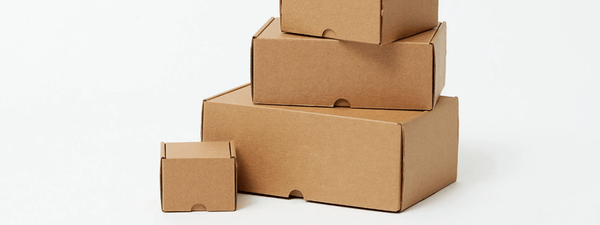
The box is only slightly bigger than the product, so it slides in and can't move. This suits sturdy items like books, clothing in a box, boxed products and tins. It uses the least material and the smallest box, which keeps postage down. A die-cut mailer box in the right size is the classic snug fit.
Wrapped
The product is wrapped in tissue or bubble wrap first, then boxed. Measure the product after wrapping, not before. This suits products that scratch easily, or a few items packed together.
Padded with void fill
The product sits in a larger box surrounded by packaging filler on every side, including above and below. This suits fragile and heavy items. Leave enough room for a good layer of filler on every side, and fill the box so the product can't move.
A starting point for clearance
These are general starting points, not rules. Always test with your real product and the way it travels.
| Product | How to pack it | Room to allow |
|---|---|---|
| Sturdy, boxed or flat items | Snug fit, no wrapping | A few millimetres on each side so it slides in |
| Items that scratch or mark | Wrapped in tissue or a sleeve | Room for the wrapping, measured after wrapping |
| Several items in one order | Wrapped, with filler between | Room for the wrap plus filler to stop items touching |
| Fragile or heavy items | Bubble wrap plus void fill all round | A generous layer of filler on every side, top and bottom |
What it means for you
The same question, answered for where your business is today.
Choose your stage at the top of the page to open the advice for you.
Start-up · under 100 units
Pick one way of packing each product and stick to it, so every order is packed the same way. A snug-fitting stock box is often the easiest and most affordable option.
Pack one order, close the box and give it a firm shake. If you can feel movement, add filler or choose a smaller box.
Growing · 100 to 2,499 units
Look at the boxes you use most. If you're filling a lot of empty space, a better-fitting size could save on filler, packing time and postage on every order.
Try this: time how long it takes to pack an order in your current box, then try a better-fitting box. Faster packing adds up.
Enterprise · 2,500 units and more
Specify the clearance and the fill method for each product, so every packer and every site does the same thing. Then test with real loads before you change sizes.
At volume, a few millimetres less on each side can mean more boxes per pallet and less freight.
Common mistakes
- 1Choosing a bigger box "to be safe". Empty space lets products move and break, and a bigger box can cost more to post. Fill it, or go smaller.
- 2Measuring before wrapping. Bubble wrap adds more than most people expect. Measure the product after it's wrapped.
- 3Forgetting the top and bottom. Filler around the sides doesn't help if the product can drop onto the base or the lid can press on it.
- 4A box that's too tight. If you have to force a product in, the box can split along the edges, and the product is hard for the customer to remove.
Clearance questions
How much space should I leave around a product in a box?
Is a bigger box safer?
How do I know if my box is the right size?
Should I measure my product before or after wrapping?
Can you recommend a box size?
From our customers
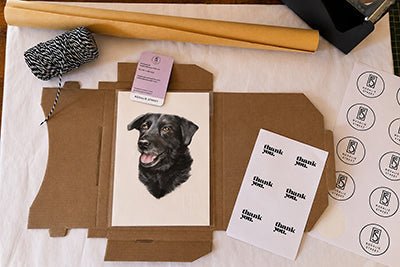
Rosalie Street ArtEach artwork goes in a protective sleeve with a backing board, then white tissue, then a superflat white mailing box.
Read their story →Keep reading
Fit and fill


Not sure how much room to leave?
Tell us what you're packing and how it travels. Our Melbourne packaging team will recommend the box and the filler, usually within 1 business day.