


Guide / Packaging basics / Chapter 1.1
Primary, secondary and shipping packaging, explained.
Most products travel in more than one layer of packaging. Here's what each layer does, which ones your business actually needs, and how to avoid paying for packaging that isn't doing a job.
The short answer
Primary packaging is in direct contact with the product, like a bottle, a jar or a pouch. Secondary packaging goes around it to present, protect or group it, like the carton around a skincare bottle, a gift box or a carry pack. Shipping packaging (sometimes called tertiary or transit packaging) protects everything on the way to your customer or warehouse, like a shipping carton, a courier satchel or a pallet wrap. Take a skincare serum: the bottle is primary, its printed carton is secondary, and the box it's posted in is shipping packaging. Many small businesses combine layers, for example a printed mailer box that is both the presentation and the shipping box.
Why the layers matter
Every layer of packaging costs money, adds weight and takes up space. Every layer also does a job: protecting, presenting, informing or making things easier to handle. The aim is to have each job done once, by the right layer.
When you know which layer does what, it becomes much easier to choose packaging, brief a supplier and spot where you could save. For example, if your product box is strong enough to post on its own, you may not need an outer carton at all.
The three layers
Primary packaging: the layer your product lives in
This is the packaging in direct contact with the product, the one your customer opens to use it. It might be a bottle, a jar, a pouch or a candle tin. Primary packaging often carries your branding and required product information, and it is often the only packaging a customer keeps.
Secondary packaging: the layer that groups and presents
Secondary packaging goes around one or more primary packs to present, protect or group them. Think of the printed carton around a skincare bottle (often a tuck end box), a gift box holding three candles, a carry pack for six bottles, a paper bag at the counter, or a mailer box with tissue and a thank-you card inside. This is where most of the unboxing experience happens.
Shipping packaging: the layer that survives the journey
Shipping (or transit) packaging protects products through couriers, warehouses and freight. It includes shipping cartons, courier satchels, void fill, tape and, for larger volumes, pallet wrap and corner protection. Customers rarely keep it, so it should be strong, light and as small as the product allows.
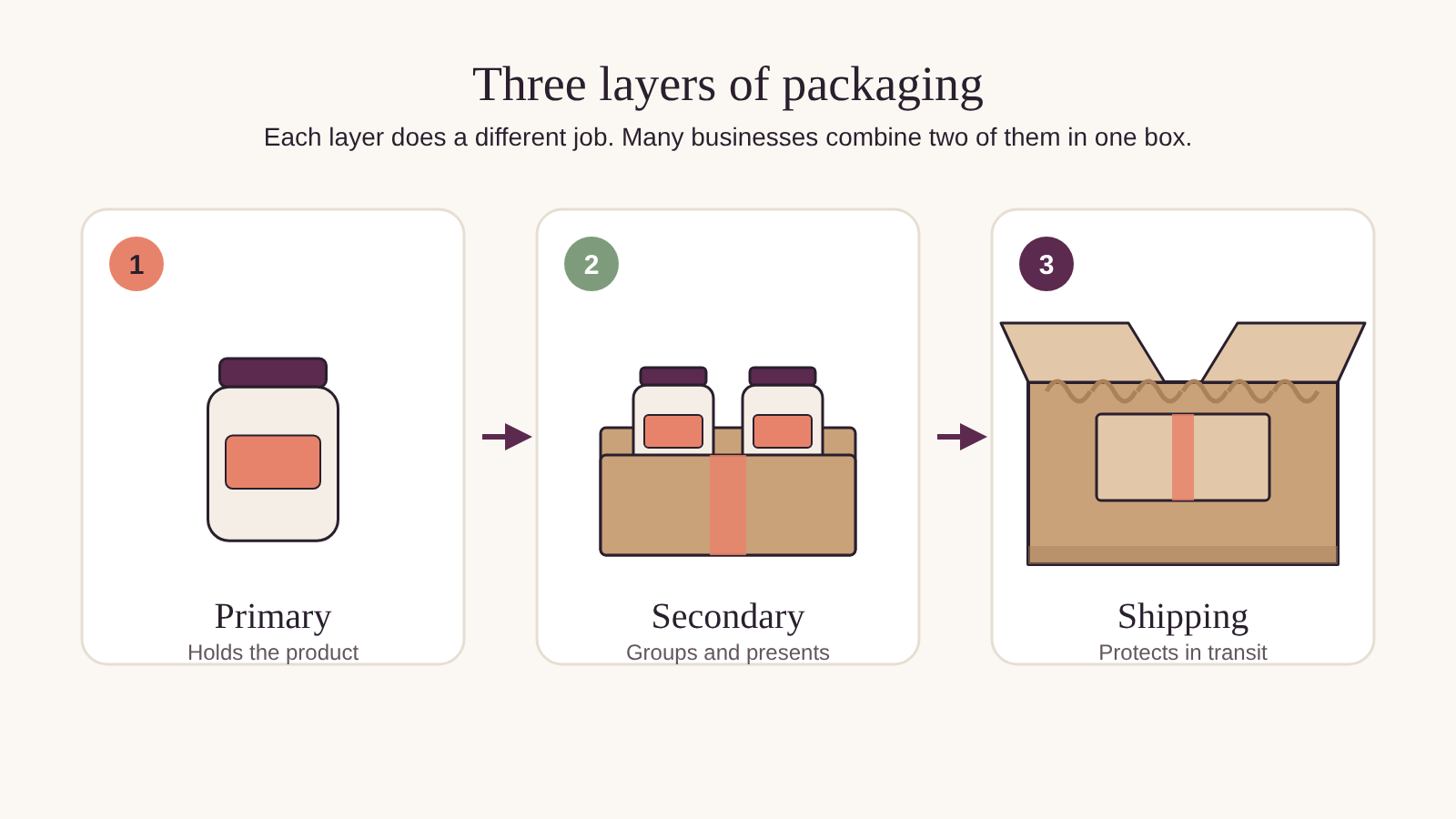
The three layers side by side
| Layer | What it does | Common examples | Who sees it |
|---|---|---|---|
| Primary | In direct contact with the product, carries product information | Jars, bottles, pouches, tins | The end customer |
| Secondary | Presents, protects or groups primary packs, carries your brand | Product cartons, gift boxes, mailer boxes, carry packs, paper bags | The customer at purchase or unboxing |
| Shipping | Protects goods in transit and storage | Shipping cartons, satchels, void fill, pallet wrap | Couriers, warehouses, and your customer briefly |
When one box does two jobs
Layers describe what packaging does, not the box style, so one pack can do more than one job. Many online businesses use a single box for more than one layer. A printed die-cut mailer box can be the presentation box and the shipping box at the same time, which saves on materials, packing time and postage. Mailer boxes are popular for exactly this reason.
Doubling up works when the box is strong enough for the courier journey and the product can't move inside it. If your products are fragile or heavy, or travel a long way, a separate outer carton is usually cheaper than replacing broken stock.
- Light, sturdy products: one printed mailer box is often enough.
- Fragile products: a product box or wrap inside a shipping carton with void fill.
- Several products in one order: a mailer or carton sized to the most common order, plus filler.
What it means for you
The same question, answered for where your business is today.
Choose your stage at the top of the page to open the advice for you.
Start-up · under 100 units
Keep it to one or two layers. A stock mailer box or satchel, plus tissue and a sticker, covers most first orders. Spend on what the customer sees, not on extra boxes.
Not sure your products will survive the trip? Send one to yourself before you buy in quantity.
Growing · 100 to 2,499 units
Look at each layer for waste. If you're putting a printed product box inside a plain carton inside a satchel, one of those layers may not be earning its keep.
Try this: list every item that goes into a typical order, then ask what job each one does.
Enterprise · 2,500 units and more
Specify each layer separately: primary and secondary for your brand team, shipping for your warehouse and freight. At volume, removing one layer or one size of carton can save on every shipment.
Write the packaging for each product into your specification so every site packs it the same way.
Common mistakes
- 1Doubling up by habit. A product box inside a mailer inside a satchel adds cost and weight without adding much protection. Check what each layer does.
- 2Relying on presentation packaging to ship. A beautiful gift box may not survive a courier depot. Test it, or add an outer carton.
- 3Forgetting the warehouse. Shipping packaging needs to stack, tape and label easily. A box that's hard to pack slows down every order.
- 4Treating shipping packaging as an afterthought. The outer box is the first thing your customer sees. A clean, well-fitted box makes a better first impression than a crushed one.
Packaging layer questions
What is primary packaging?
What is secondary packaging?
What is tertiary packaging?
Can one box be both secondary and shipping packaging?
How many layers of packaging do I need?

From our customers
Lillydale Candle CoCandle boxes, one-piece postage boxes and gift bags work together to create their unboxing.
Read their story →Keep reading
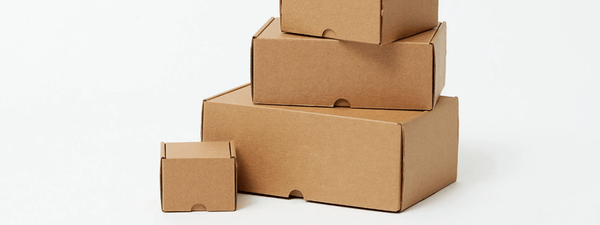
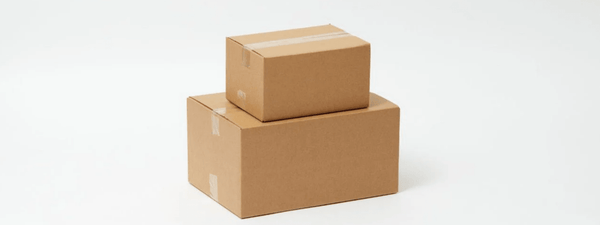
Shop by layer

Not sure what your products need?
Tell us what you sell and how it ships. Our Melbourne packaging team will suggest the simplest packaging that does the job, usually within 1 business day.