


Guide / Shipping & protection / Chapter 7.5
Drop testing your packaging.
You don't need a lab to find out whether your packaging works. Here's a simple way to test boxes, filler and sealing before you send hundreds of orders.
The short answer
A simple drop test is an informal screening check of how your packed product handles knocks. Pack an order exactly as a customer would receive it, drop it from a set, recorded height onto a hard floor on its faces, edges and corners, then open it and check for damage and movement. Follow it with a real-world test: send several parcels through your usual service. These checks help you spot weak points early, but they aren't a validated transit test. Formal test methods also cover vibration, compression and conditioning.
Why test at all
Parcels are handled many times between your packing bench and your customer's door: lifted, stacked, sorted, loaded and unloaded. A few minutes of testing tells you whether your box, filler and sealing can handle that, before breakages turn into refunds and reviews.
Testing is most useful when something changes: a new product, a new box size, a different filler, a new carrier or a heavier order.
A simple drop test
1. Pack it exactly as you would ship it
Use the real product, the real box, the real filler and the real tape. A test with a substitute product or a half-packed box doesn't tell you much.
2. Choose a hard surface
A concrete or tiled floor is a fair test. Carpet softens the impact and gives a false sense of security.
3. Set a height and drop it in several ways
Choose a drop height that suits the parcel's weight and how it's handled (lighter parcels are more likely to be thrown or dropped from higher), and use the same height every time. Drop the parcel flat on its base, on its top, on a long side and a short side, on one edge and on one corner. Corners and edges are where boxes usually fail.
4. Open it and check against pass/fail points
Decide beforehand what counts as a fail, such as any visible damage, a leak, or a product that moved. Check the product for chips, cracks, dents or leaks. Check whether the product moved inside the box, whether the filler compressed and whether the seams and tape held.
5. Change one thing and test again
If something failed, change one thing at a time, such as more filler underneath, a stronger board or a smaller box, so you know what fixed it.
What the results tell you
| What you see | Possible cause | What to try |
|---|---|---|
| Product moved inside the box | Too much empty space | More filler, or a better-fitting box |
| Damage on the corner or edge | Not enough cushioning at the edges | Wrap more around corners, add corner protection |
| Box crushed or split | Board too light for the weight | Stronger board or double wall |
| Tape lifted or seam opened | Weak sealing | Heavier-duty tape, tape the edges as well |
| Several items damaged each other | Items touching | Wrap items separately, add dividers or filler between |
Test in the real world too
A drop test doesn't copy everything a parcel goes through, such as stacking, vibration and weather. For heavy, sharp, liquid or hazardous products, use a controlled method or professional testing rather than a casual drop. Send several parcels through the service you actually use, to an address in another state if you can, and check how they arrive. Ask a few early customers to send you a photo of their parcel on arrival.
What it means for you
The same question, answered for where your business is today.
Choose your stage at the top of the page to open the advice for you.
Start-up · under 100 units
Test every new product before you start selling it. A drop test and a few parcels sent to a friend interstate will help you spot weak points before you sell.
Keep the test parcel's packaging as your packing standard once it passes.
Growing · 100 to 2,499 units
Test whenever you change boxes, filler or carriers, and look at your breakage records to decide what to test first.
Try this: keep a simple log of each test: what you packed, how you dropped it and what you found.
Enterprise · 2,500 units and more
Consider formal transit testing for high-value or high-volume products, and test with real pallet loads and stacking. Record results in your packaging specification.
Re-test after any change to board, size or supplier, not just after complaints.
Common mistakes
- 1Testing on carpet. Soft floors hide problems. Use a hard surface.
- 2Only dropping it flat. Corners and edges fail first. Drop on those too.
- 3Changing everything at once. If you change the box, filler and tape together, you won't know which change worked.
- 4Testing once and never again. Products, boxes and carriers change. Re-test when anything changes.
Drop testing questions
What is a packaging drop test?
How high should I drop a parcel?
Do I need a lab to test packaging?
How many times should I drop it?
What should I do if my test fails?
Keep reading
Test with the real thing
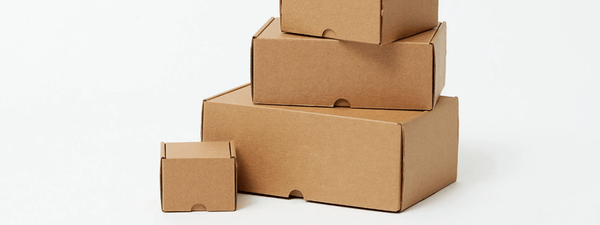


Want to test before you buy?
Order samples of the boxes you're considering and test them with your products. Our Melbourne team can suggest what to try, usually within 1 business day.