


Guide / Box & packaging styles / Chapter 2.1
Shipping cartons (regular slotted cartons).
The plain brown carton is the workhorse of packaging. Here's how regular slotted cartons work, which board to choose, and when a carton is better than a mailer box.
The short answer
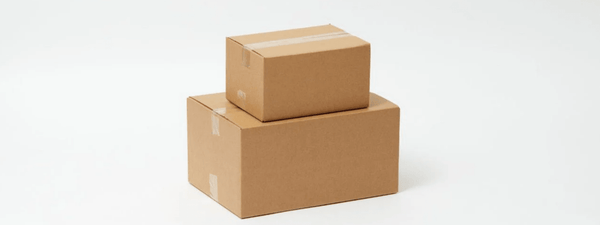
A regular slotted carton (RSC) is the classic shipping box: four sides, with flaps top and bottom that meet in the middle and are sealed with tape. It's simple, strong, economical and made in almost any size. Cartons suit heavier items, bulk orders, storage and freight. Our cartons are made from corrugated board, described by flute, and printed cartons are printed with flexo printing from 250 units.
How a regular slotted carton works
An RSC is cut and creased from one sheet of corrugated board, then glued at one corner so it arrives flat. To use it, you open it into a tube, fold the bottom flaps in and tape them, fill it, then fold and tape the top.
All four flaps on each end are the same length, and the long flaps meet in the middle. That makes the design efficient to produce in almost any size, which is why it's the most common box used for shipping and storage.
What cartons are good for
- Heavier products that need more strength than a light mailer box.
- Bulk and wholesale orders with several items packed together.
- Storage and moving, where boxes are stacked on top of each other.
- Outer cartons around product boxes, gift boxes or several smaller parcels.
- Freight and pallets, where strength and stacking matter more than presentation.
Choosing the board
Board is described by flute. This is general guidance, not a load rating: liner quality, carton size and how cartons are stacked also matter, so test with your real load. Our flute chapter explains each one in detail.
| Board | Typical use | Notes |
|---|---|---|
| B flute, single wall | Everyday cartons for moderate weights | Easy to fold and tape, resists crushing |
| C flute, single wall | Heavier contents and stacked storage | More cushioning and stacking strength |
| BC flute, double wall | Heavy goods, moving and freight | Two layers of flute for heavy and stacked loads |
Carton or mailer box?
Both are corrugated boxes, but they do different jobs. A carton is built for strength, size and economy, and is sealed with tape. A die-cut mailer box is built for presentation: it folds together without glue, often locks closed, and opens like a gift.
For light products sent to customers, a mailer box usually gives a better first impression. For heavy products, large orders and anything going on a pallet, a carton is usually the better choice. Many businesses use both.
What it means for you
The same question, answered for where your business is today.
Choose your stage at the top of the page to open the advice for you.
Start-up · under 100 units
Keep a few carton sizes for larger or heavier orders, and use mailer boxes or satchels for everyday orders. Buy cartons in the quantities you'll use within a few months.
Seal cartons with good packaging tape across the middle seam and over the edges.
Growing · 100 to 2,499 units
Look at which carton sizes you actually use. Two or three well-chosen sizes usually cover most orders, which saves on storage and simplifies packing.
Try this: if you're filling a lot of empty space in cartons, a better-fitting size will save on filler and freight.
Enterprise · 2,500 units and more
Specify the board and dimensions for each carton, and consider printed shipping cartons with your logo, handling marks or product codes. Flexo printing starts from 250 units.
Test stacked cartons with your real load before changing board grades.
Common mistakes
- 1Using a carton that's too big. Empty space lets products move and break, and can increase cubic weight.
- 2Choosing board by thickness alone. Double wall adds weight to every shipment. Use it when the load needs it.
- 3Weak sealing. One strip of tape across the middle isn't enough for heavy cartons. Tape the edges too.
- 4Overloading. A carton that's packed too heavy can split at the seams. Use stronger board or split the order.
Shipping carton questions
What is a regular slotted carton (RSC)?
What's the difference between a carton and a mailer box?
Single wall or double wall?
Can you print cartons with my logo?
What size carton do I need?
From our customers
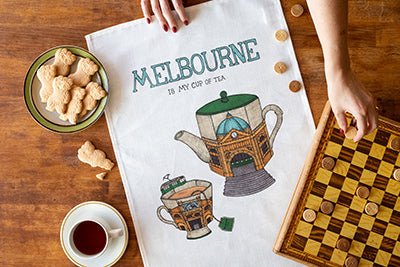
The Nonsense MakerShipping boxes in multiple sizes for everything from greeting cards to homewares and wholesale orders.
Read their story →Keep reading
Shop cartons


Need cartons for your products?
Send us your product sizes, weights and how they travel. Our Melbourne team will recommend the right carton and board, usually within 1 business day.