


Guide / Box & packaging styles / Chapter 2.5
Snap lock (1-2-3) bottom boxes.
A stronger base for heavier retail products, with no glue or tape. Here's how a snap lock bottom works, when to choose it over a tuck end, and how it compares with a crash lock.
The short answer
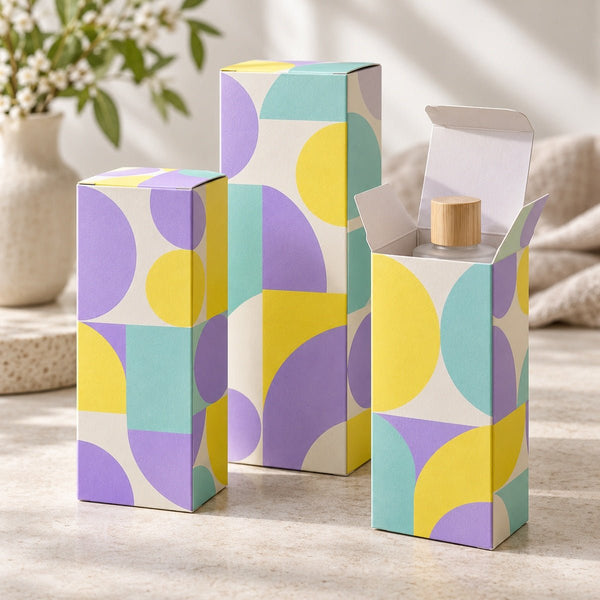
A snap lock bottom, also called a 1-2-3 bottom, is a carton base made of four flaps that interlock when you fold them in order. It's generally stronger at the base than a tuck end flap (how much depends on the carton size, board and load), needs no glue or tape, and the box still ships flat. Snap lock boxes suit heavier cosmetics, glass jars, candles and bottles. We make custom printed snap lock boxes in 285gsm paperboard, offset printed, from 250 units, including a snap lock box with a plastic window.
How a snap lock base works
The base has four flaps of different shapes. You fold them in sequence, which is why it's called a 1-2-3 bottom:
- 1. Fold in the first flap, usually the U-shaped or notched panel.
- 2. Fold in the two side flaps.
- 3. Fold the last panel down and push it in, so its tabs lock under the others.
Once locked, the flaps support each other, so the weight of the product sits across the whole base rather than on one tuck flap. The top of a snap lock box usually closes with a tuck flap, so customers open it like a normal carton.
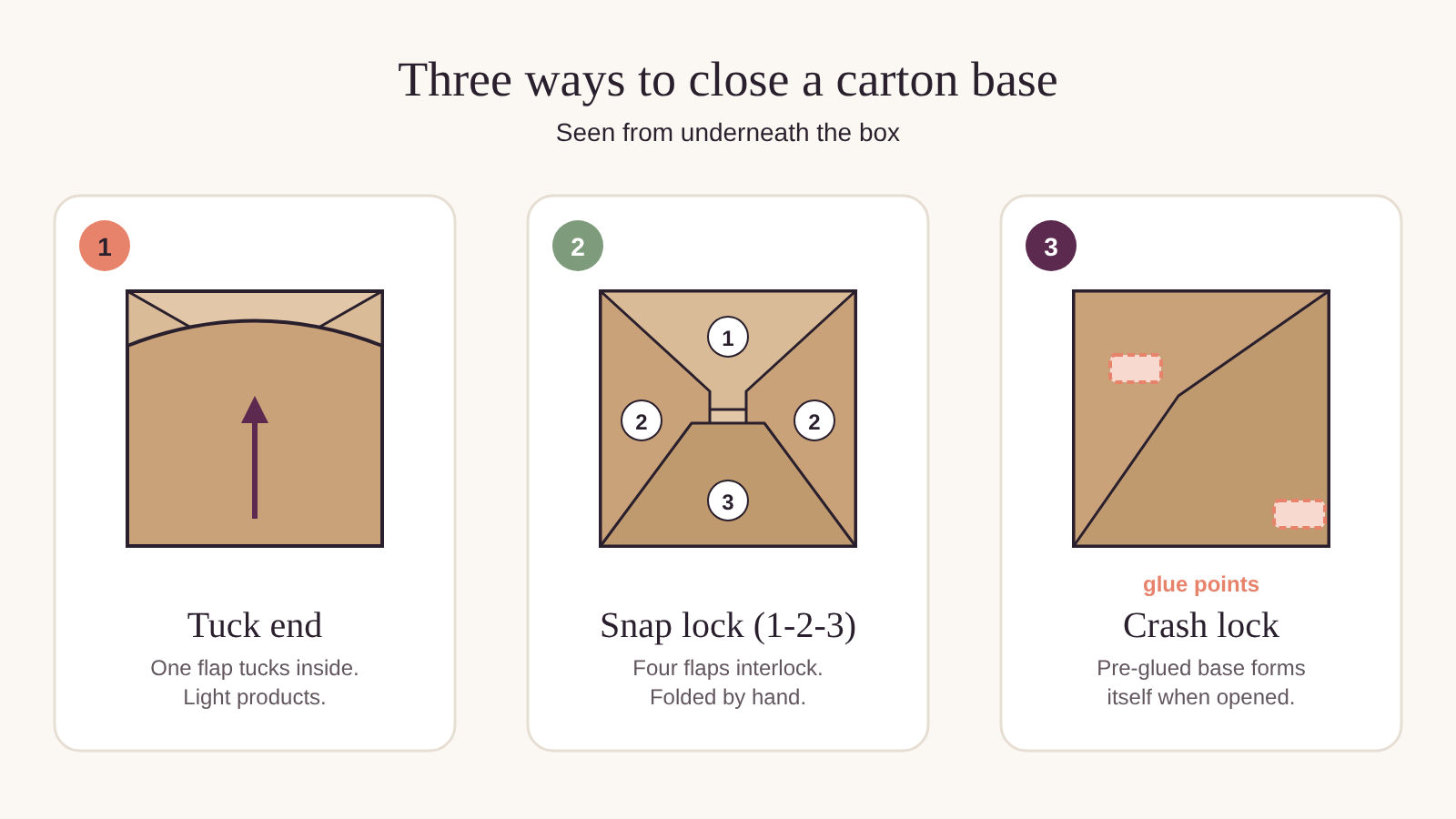
Tuck end, snap lock or crash lock?
| Base | Strength | Packing speed | Best for |
|---|---|---|---|
| Tuck end | Light loads | Quick | Serums, lip products, small accessories |
| Snap lock (1-2-3) | Medium to heavier loads | Takes a few seconds to fold | Glass jars, candles, bottles, heavier cosmetics |
| Crash lock (auto bottom) | Medium to heavier loads | Fastest, the base forms as you open it | Larger runs and busy packing benches |
When to choose a snap lock box
- Your product has some weight. If a tuck end base might push open under a jar or bottle, a snap lock base is the simple fix.
- You're packing by hand in modest numbers. Folding the base takes a few seconds per box, which is fine for most small and growing brands.
- You want a simple, economical base. A snap lock base is folded by hand, so it doesn't need the extra gluing of a crash lock base.
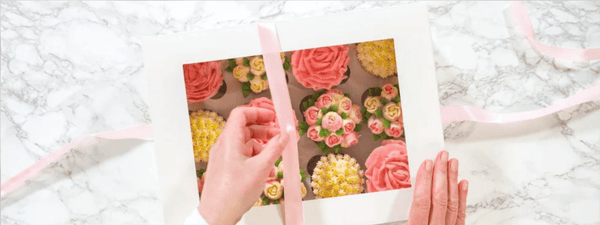
- You'd like a window. Our snap lock box with a plastic window lets customers see the product on the shelf.
What it means for you
The same question, answered for where your business is today.
Choose your stage at the top of the page to open the advice for you.
Start-up · under 100 units
If your product is heavy for its size, such as a candle or a glass jar, ask for a snap lock base on your first custom carton. Start with a single printed sample.
Our cosmetic carton sample is $100, reimbursed if you order within 3 months.
Growing · 100 to 2,499 units
When you add heavier products to a range that already uses tuck end boxes, keep the same print design and switch just those cartons to a snap lock base.
Try this: time how long your team takes to fold a snap lock base. If it's slowing you down, look at crash lock.
Enterprise · 2,500 units and more
At volume, compare the folding time of snap lock against crash lock across your whole run. Specify the base style for each product in your packaging specification.
Test the base with your heaviest product before approving the run.
Common mistakes
- 1Folding in the wrong order. The base only locks if the flaps go in sequence. Show your team once and it becomes quick.
- 2Choosing tuck end for heavy products. A heavy product can push a tuck flap open. Use a snap lock or crash lock base.
- 3Forgetting assembly time at volume. A few seconds per box adds up over thousands of boxes.
- 4Leaving no room for inserts. If your product needs an insert to stop it moving, allow for it in the carton size.
Snap lock box questions
What is a snap lock bottom box?
Is a snap lock stronger than a tuck end?
What's the difference between snap lock and crash lock?
What's the minimum order for custom snap lock boxes?
Can a snap lock box have a window?
Keep reading
Retail and product boxes
Need a stronger carton?
Tell us what your product weighs and how it's sold. Our Melbourne team will recommend the right base and size, usually within 1 business day.