


Guide / Ordering & production / Chapter 6.4
What drives packaging cost?
Two boxes that look similar can be priced very differently. Here are the things that decide what packaging costs, and where you have room to save without making it worse.
The short answer
Packaging cost comes down to six things: quantity, size, material and board, print method and coverage, finishes and extras, and time. Quantity often has a big effect, because set-up costs are shared across more units, although on some jobs tooling or special finishes matter more. After that, the right size and board often save more than haggling over price, because they also cut filler, damage and postage on every order.
The six cost drivers
1. Quantity
Every custom job has set-up work before the first unit is made. Spread across 25 units, that set-up adds a lot to each box. Spread across 2,500, it adds very little. That's why the cost per unit falls as quantity rises, and why higher-volume print methods have higher minimums. Which print methods are open to you also depends on the product and board, not just the quantity. Our minimum order chapter explains the minimums.
2. Size
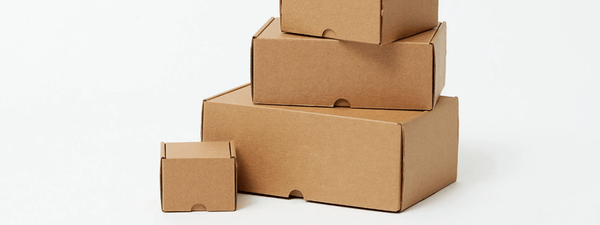
A bigger box uses more board, takes more space to store and often costs more to post. A box that fits snugly is usually cheaper three ways: in materials, in filler and in postage.
3. Material and board
Board grade, thickness and colour all affect cost. Thicker or double wall board costs more and weighs more, so use it when the load needs it rather than by default. Specialty materials and rigid board cost more than standard corrugated board.
4. Print method and coverage
Plain packaging costs less than printed. Among printed options, the method, the number of colours and how much of the box is covered all matter. Digital printing suits small runs on kraft brown and white boxes; screen, flexo and offset printing can be better value as quantities rise, but each suits particular products: screen for die-cut boxes, flexo for shipping cartons and offset for paperboard.
5. Finishes and extras
Lamination, foil, embossing, inserts, windows and inside printing all add to the cost. They can be worth it for gift and premium packaging, but each one should earn its place.
6. Time
Standard lead times usually cost less than express options. Planning ahead gives you more choice.
Where you can usually save
| Cost driver | Ways to save | Watch out for |
|---|---|---|
| Quantity | Order the sizes you use most in larger runs | Ordering more than you'll use before your branding changes |
| Size | Choose the closest fit, or a multi-crease box | Boxes so tight they're hard to pack |
| Board | Match the board to the load | Under-specifying and paying for damage instead |
| Fewer colours, less coverage, the right method for the quantity | Saving on print where branding matters most | |
| Finishes | Keep finishes for presentation pieces | Adding extras nobody notices |
| Time | Order before you run out, avoid express | Rush orders during peak season |
Look at the total cost, not just the box price
The lowest-priced box isn't always the lowest-cost packaging. A box that's slightly more expensive but fits better can use less filler, pack faster, cost less to post and reduce breakages. Add up the box, the filler, the tape, the packing time, the postage and the cost of damaged orders, and compare options on that total.
An illustrative total-cost comparison
Illustrative example only, with made-up round numbers per order. These are not PackQueen prices.
| Cost per order | Option A: cheaper, oversized box | Option B: better-fitting box |
|---|---|---|
| Box | $1.00 | $1.20 |
| Filler | $0.40 | $0.10 |
| Packing time | $0.80 | $0.50 |
| Postage difference | $0.60 | $0.00 |
| Damage allowance | $0.50 | $0.20 |
| Total | $3.30 | $2.00 |
What it means for you
The same question, answered for where your business is today.
Choose your stage at the top of the page to open the advice for you.
Start-up · under 100 units
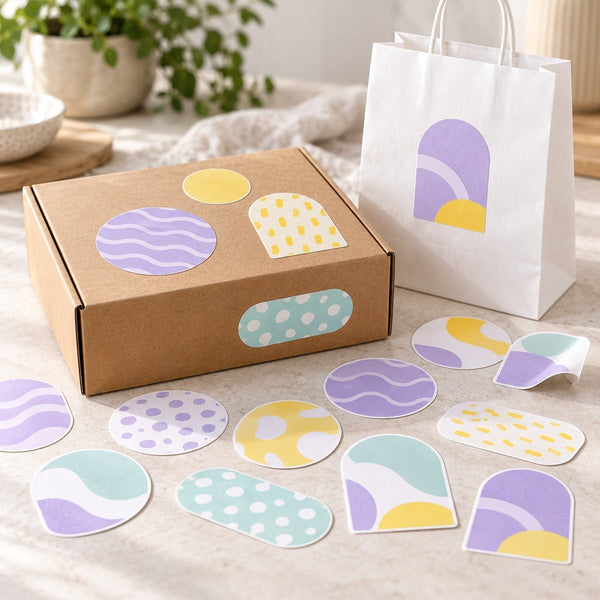
Keep costs low with stock packaging, small quantities and simple branding like stickers and tissue. Spend where the customer notices.
Before you buy, check the postage cost of each box size you're considering.
Growing · 100 to 2,499 units
Quantity and size are your biggest levers now. Moving your most-used boxes to a larger run, and right-sizing them, often saves more than any other change.
Try this: work out your total packaging cost per order, including postage and filler, then test one change at a time.
Enterprise · 2,500 units and more
At volume, small changes in board, size and print coverage multiply across every unit. Specify each one deliberately and review it when products or carriers change.
Track damage rates alongside packaging cost, so savings don't simply move cost into returns.
Common mistakes
- 1Comparing box prices only. The total cost per order includes filler, packing time, postage and damage.
- 2Over-specifying board. Double wall everywhere adds cost and weight. Use it where the load needs it.
- 3Printing everything everywhere. Full coverage, many colours and finishes on every box add up quickly.
- 4Paying for rush. Express options and last-minute orders cost more. Plan ahead.
Packaging cost questions
Why is custom packaging more expensive per unit in small quantities?
What has the biggest effect on packaging cost?
How can I reduce packaging costs?
Is the lowest-priced box the best value?
How do I get an accurate price?
Keep reading
Good-value options

Want to bring your packaging cost down?
Send us what you use now and how many. Our Melbourne team will suggest where you could save, usually within 1 business day.