


Guide / Ordering & production / Chapter 6.1
Minimum order quantities (MOQs) explained.
Why custom packaging has a minimum order, what our minimums are for each product, and how to plan your first run so you don't end up with boxes you can't use.
The short answer
A minimum order quantity (MOQ) is the smallest number of units we can make in one custom run. It exists because every custom job has set-up work, such as preparing artwork, plates, screens or tooling, before the first unit is made. Our custom minimums start from 25 units for digitally printed boxes and kraft gift bags, and from 250 units for screen, flexo and offset printing, rigid and magnetic boxes and premium gift bags. Stock items have no custom minimum, although some are sold in packs or lots, and made-to-order standard sizes may have their own order quantities.
Why minimums exist
Before a custom order can be made, the job has to be set up. Artwork is checked and proofed, the machine is prepared, and with some print methods a plate, screen or cutting tool is made just for your design. That set-up costs roughly the same whether we make 25 units or 2,500.
The minimum is the point where that set-up cost is shared across enough units to make the job sensible. Digital printing needs very little set-up, which is why its minimum is low. Screen, flexo and offset printing need more, so their minimums are higher, but the cost per unit falls quickly as the quantity goes up.
Our minimum order quantities
These are our current minimums for custom orders. Each size and design is normally its own run with its own minimum.
| Product or print method | Minimum order |
|---|---|
| Digitally printed die-cut boxes (kraft brown or white) | From 25 units |
| Screen printed die-cut boxes (kraft brown, white or black) | From 250 units |
| Flexo printed shipping cartons and offset printed paperboard | From 250 units |
| Custom kraft gift bags | From 25 units |
| Premium laminated gift bags | From 250 units |
| Custom cosmetic and skincare cartons | 250 units |
| Custom rigid boxes | 250 units |
| Custom collapsible magnetic boxes | 250 units |
| Custom printed courier satchels | From 100 units (per the product page) |
| Custom printed tissue paper | 250 sheets |
| Custom printed ribbon | 1 roll |
| Custom packaging tape | From 10 rolls |
| Custom labels | From 1 roll |
| Custom stickers | From 100 |
How to plan around a minimum
Start where the minimum is low
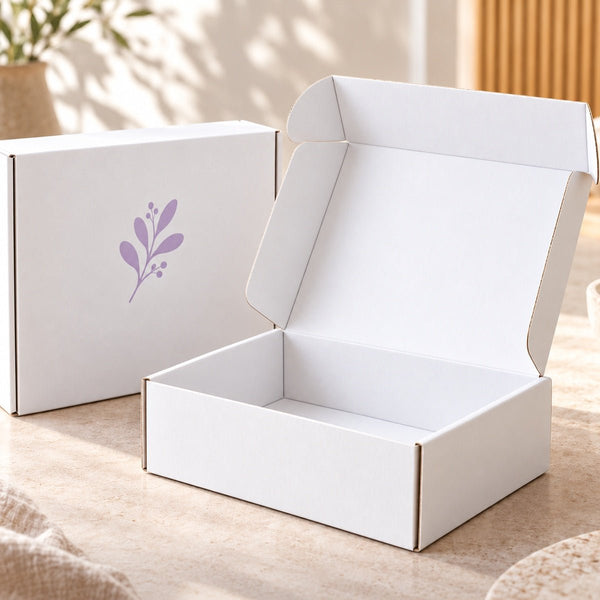
If you're testing a new product or brand, start with digitally printed boxes or kraft gift bags from 25 units. You get your own printed packaging without committing to hundreds of units.
Order what you'll use within a sensible time
A bigger order lowers the cost per unit, but only if you use the packaging. Work out how many orders you send in a typical month, then order enough for a few months rather than a year.
Keep artwork and sizes consistent
Every new design or size is a new run with its own minimum, and quantities of different sizes or designs don't combine. Fewer designs, and one size that fits several products, keep your minimums manageable.
Brand stock packaging in between
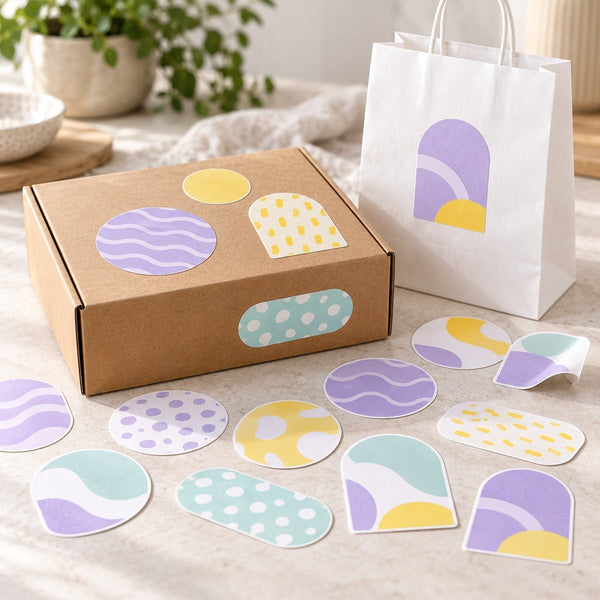
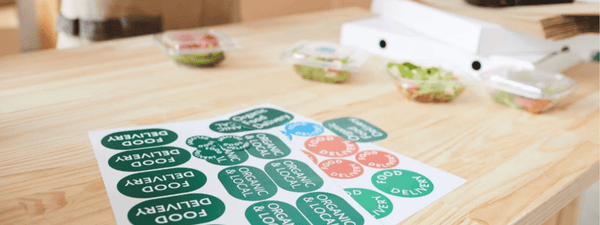
Stickers from 100, tape from 10 rolls and labels from 1 roll let you brand stock packaging without a full custom box run.
What it means for you
The same question, answered for where your business is today.
Choose your stage at the top of the page to open the advice for you.
Start-up · under 100 units
Stick to low minimums: digital printing from 25 units, custom stickers from 100 and a roll of labels. You'll look branded without tying up cash in boxes.
Order a plain sample before your first run so you know the size is right.
Growing · 100 to 2,499 units
Once you know your bestsellers, moving the boxes you use most to a 250-unit run can lower the cost per unit. Keep low-minimum options for new or slow-selling products.
Try this: for your top box size, compare the cost of four 25-unit orders with one larger run.
Enterprise · 2,500 units and more
At this volume most runs are well above the minimums. The question becomes how many to order each time, which depends on your usage, storage space and lead times.
Plan reorders using our lead times, so you never order in a rush.
Common mistakes
- 1Ordering far more than you need. A low price per unit isn't a saving if half the boxes sit in storage or your branding changes.
- 2Splitting one run into many designs. Each design or size is usually a separate run with its own minimum. Fewer designs keeps things simple.
- 3Forgetting stock options. If a stock size fits well, stickers, tissue and labels can brand it with very small minimums.
- 4Leaving it too late. Minimums are easier to plan for when you're not about to run out. Order before you need it.
Minimum order questions
What does MOQ mean?
What's the smallest custom packaging order?
Why is the minimum higher for some print methods?
Is there a minimum for stock packaging?
Can I mix sizes or designs to reach the minimum?
From our customers
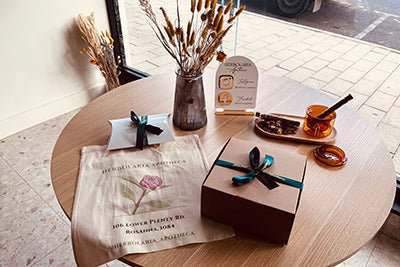
Herbolaria ApothecaLower minimum order quantities let them create a polished brand presentation without buying excess stock.
Read their story →Keep reading
Low-minimum options
Not sure how many to order?
Tell us how many orders you send each month. Our Melbourne team will recommend a sensible first run, usually within 1 business day.