By Monique, Founder of PackQueen · Food Packaging Strategy · 10 min read
3 Things You'll Take Away From This Article
➡ Café and bakery packaging needs to work at pace. At 200 transactions before 10am, packaging that's fiddly to open or slow to close is a direct operational cost. The right packaging is fast and brand-forward simultaneously — these aren't competing requirements.
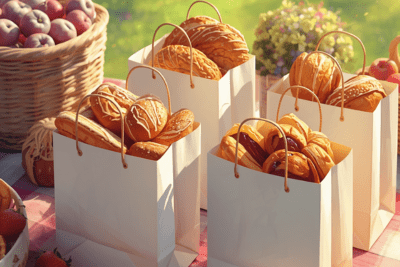
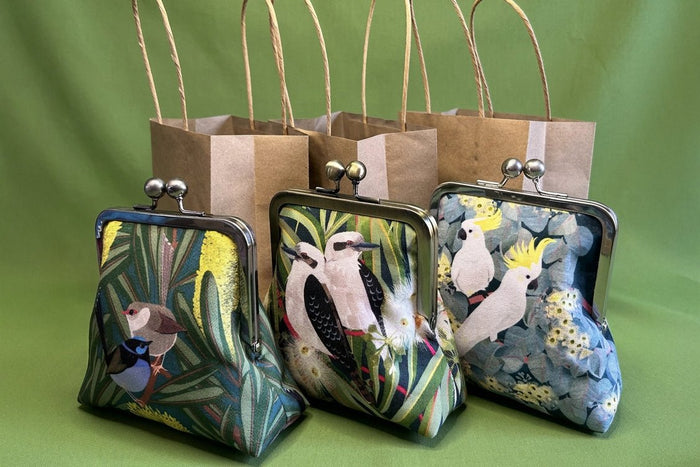
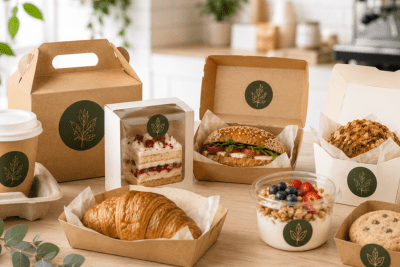
➡ The carry pack that leaves your counter is your most mobile brand asset — and most cafés are running it unbranded. At 150 carry-out orders per day, you're generating 600–900 public brand impressions daily. Branded or blank — your choice. The cost difference is $0.35–$0.55 per bag.
➡ Counter service food packaging has specific technical requirements that generic packaging often doesn't meet. Height clearance for iced cupcakes. Steam management for hot donuts. Getting these wrong costs more than getting them right from the start.
Hi, I'm Monique — The Counter Is Where the Brand Decision Happens
I'm the founder of PackQueen. What I see most often when I walk into a café or bakery is a mismatch between the quality of the food and the quality of the packaging. An exceptional lamington in a bag that soaks through. A beautifully decorated cupcake in a box where the icing has made contact with the lid. A gorgeous artisan donut in a plain white box that communicates nothing about the brand. The food deserves better — and so does the business, because every product that leaves the premises is either building or failing to build the brand.
☕ Your carry pack is the last thing a customer receives and the thing they carry the furthest. For a café doing 200 carry-out orders per day, that's 200 brand impressions radiating into the surrounding suburb every single day. Make them count.
The Operational Reality: Packaging That Works at Pace
Opening Speed
A carry pack that takes two hands to open, or that collapses when set on the counter, costs time. At 200 transactions per day, 5 seconds of additional packing time per order is nearly 17 minutes of lost productivity daily. Self-opening SOS bags, flat-bottom bags that stand upright independently, and pre-opened box formats address this directly. Always test your chosen packaging in real counter conditions before ordering in volume.
Closure Integrity
A bag that opens in transit, a box whose lid pops up in the customer's car — these create negative brand experiences. Tuck-close boxes should close with a positive snap. Bags should fold or seal cleanly. Cup carriers should hold cups stably without the customer having to grip them.
Stack and Storage
Café packaging lives under the counter or in a drawer. Flat-pack formats that assemble quickly are almost always preferable to pre-assembled formats for counter storage.
Cupcakes at the Counter: The Height Problem and the Solution
The most common cupcake packaging failure: lid contact. The closed box touches the icing, leaving a mark or flattening the swirl peak. Entirely preventable with the right box selection.
- Measure your tallest cupcake from base to the very top of the highest decoration, then add 10–12mm minimum clearance. That is your minimum required interior box height.
- Account for the insert. If your insert raises the cupcake 10mm off the box floor, that 10mm comes out of your headroom. A 90mm iced height plus a 10mm insert lift requires 100mm interior height minimum.
- Test before you order. Close the box on a fully decorated cupcake and check for lid contact. If there's any, the box is wrong. No exceptions.
Donuts at the Counter: Protection, Display and Brand
A specialty donut box needs to do three things simultaneously: protect the glaze and toppings, display the product attractively, and carry the brand into the world beyond the counter.
The Window Decision
For counter display and impulse purchase, a window box is almost always the stronger commercial choice. The visual appeal of a specialty donut is a conversion tool — packaging that hides it is a missed opportunity.
The Height Check
The top of the donut, including all toppings and glazes, should clear the closed lid by at least 8–10mm. Test with your tallest decorated donut before committing to any box.
Dessert Display: The Café Counter as a Marketing Surface
The café dessert display case is one of the most powerful marketing surfaces a food business operates — and most cafés underuse it.
- Visibility first: window boxes, clear acetate domes and open trays allow the product to be the visual. Closed packaging in a display case is a missed conversion opportunity.
- Individual packaging: a dessert in its own box signals premium quality and simplifies the purchase transaction — the customer picks it up, you close it, done.
- Consistent presentation: all desserts in the same packaging family creates a display that reads as intentional and professional rather than assembled from whatever was available.
The Carry Pack: Your Most Mobile Brand Asset
| Metric | Plain Bag | Custom Printed Bag |
|---|---|---|
| Daily carry-out orders (example) | 150 | 150 |
| Daily brand impressions | 600–900 (zero brand value) | 600–900 (actively working) |
| Annual brand impressions | 219,000–328,500 (wasted) | 219,000–328,500 (compounding) |
| Custom print cost premium | — | $0.35–$0.55 per bag |
| Cost per 1,000 impressions | — | $58–$137 vs $500–$1,500 for social ads |
Customer Story: A Melbourne Bakery Transforms Its Counter Experience
A Melbourne café-bakery had been operating for four years with strong product quality and a mix of packaging from different suppliers — plain white boxes for pastries, a carry tray that matched nothing else. Functional. Inconsistent. Invisible as a brand.
We built a three-element counter packaging system: a custom branded carry bag in two sizes in their signature colours, a kraft window box for pastry display in the same material direction with a matching label format, and a cupcake box with height verified against their tallest buttercream profile.

Frequently Asked Questions
1. How do I choose carry pack sizes for a café with a varied menu?
Identify your two or three most common order configurations. For most cafés: a small bag for single item orders (40–50% of transactions), a medium bag for coffee plus pastry or small lunch orders, and a large bag or box carrier for multi-item orders. Run both or all sizes in the same brand design — visual consistency for the customer and simpler decision-making for staff.
2. What's the best way to handle packaging for a seasonal or rotating dessert menu?
Build a flexible system: a core box format that works across most of your desserts, a consistent label design with a variable product name field that updates for each season, and seasonal finishing elements (tissue colour, ribbon) that change cheaply while the base packaging stays constant. This means ordering packaging once and updating cheaply as the menu changes — rather than holding excess stock of product-specific formats.
3. At what point does it make sense to invest in custom printed packaging for a café?
Two reliable signals: you're doing 100+ carry-out orders per day with a plain bag (at this volume the CPM maths strongly favour custom printing), or you're getting customers from outside your immediate area through social media or word of mouth (your product is already travelling — branded packaging accelerates that spread). For businesses at lower volumes, a branded label on a quality stock bag achieves strong brand presence at no minimum order commitment.
Ready to upgrade your food packaging? Browse our complete food packaging range or get in touch with the PackQueen team.
Monique | Founder, PackQueen
packqueen.com.au · Food Packaging for Australian Cafés, Bakeries and Counter Service Businesses