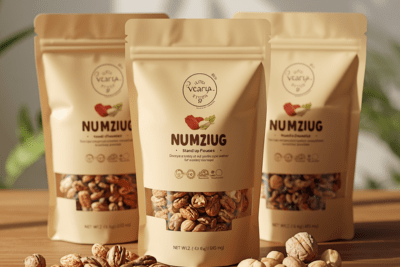
By Monique, Founder of PackQueen · Food Packaging · 8 min read
3 Things You'll Take Away From This Article
➡ The custom standup pouch has become the go-to packaging format for artisan and specialty food brands across Australia. If you're still using plain bags or generic containers for retail-shelf food products, you're likely leaving sales on the table.
➡ A well-designed custom standup pouch does four jobs simultaneously: it preserves the product, presents it beautifully, communicates your brand, and stands out on a crowded shelf. These four jobs are the difference between a product that sells and a product that sits.
➡ Custom standup pouches are now more accessible than ever for small and emerging food brands. Lower minimum order quantities, shorter lead times and improved print quality mean that the custom standup pouch is no longer the exclusive domain of large food manufacturers.
Hi, I'm Monique — The Standup Pouch Has Changed What Food Retail Looks Like
I'm the founder of PackQueen. Five years ago, standup pouches were a relatively niche format — used by a handful of progressive food brands, mostly in the coffee, tea and nut categories. Today, they're everywhere. Granola, dried fruit, spice blends, protein powders, pet treats, artisan biscuits, specialty salts — the standup pouch has become the default premium packaging format for retail shelf food products across a huge range of categories.
A well-designed custom standup pouch combines practical functionality (resealable, moisture-resistant, lightweight) with premium presentation (full 360-degree print canvas, stand-up shelf presence, professional quality signal) at a price point accessible to small and emerging food brands. If you're selling a retail-shelf food product in a plain bag — this article is for you.
🛒 A custom standup pouch tells a retailer: 'This product is ready for your shelf.' A plain bag says: 'This product is still figuring itself out.' In a competitive food retail landscape, that difference is commercial.
Why the Standup Pouch Has Become the Premium Food Retail Default
- Shelf presence: a standup pouch stands upright on a retail shelf without support, presenting a full front panel to the consumer. On a crowded specialty food shelf, this is a significant commercial advantage.
- Print canvas: front panel, back panel, side gussets and bottom gusset are all printable — more usable print area per gram of packaging than almost any other food format
- Product protection: multi-layer laminate structures provide oxygen barrier, moisture barrier, UV protection and heat seal integrity engineered for food preservation
- Resealability: a zipper closure — now expected by consumers for most food products — extends the product's usable life and is a functional benefit that drives repeat purchase
- Sustainability profile: standup pouches use significantly less material than equivalent rigid packaging formats, translating to lower carbon footprint in production and transport
Custom Standup Pouch Formats: A Practical Guide
| Format | Closure | Best For | Key Advantage |
|---|---|---|---|
| Standard standup pouch | Heat seal only | Coffee, tea, single-use food products | Simplest format, lowest cost |
| Zip-lock standup pouch | Zipper + heat seal | Granola, nuts, dried fruit, spices, pet treats | Resealable — consumer favourite, best for multi-use products |
| Spout pouch | Spout + cap | Liquid/semi-liquid products (sauces, drinks, baby food) | Pourable, resealable, compact |
| Flat-bottom (box pouch) | Zip-lock standard | Premium food retail, specialty products | Most premium appearance; stands perfectly flat on base |
| Clear window pouch | Zip-lock standard | Products where the product is the selling tool | Product visible; combines craft aesthetic with display function |
| Recyclable standup pouch | Zip-lock standard | Eco-aligned brands, sustainability-led retail | Kerbside-recyclable; genuine sustainability credential |
Choosing Your Material: The Brand Positioning Decision
- Kraft (natural brown): artisan, natural, wholesome — the strongest material signal for brands with provenance, sustainability or handmade positioning
- Matte white: clean, modern, premium — the most versatile choice for brands that want a contemporary aesthetic
- Matte foil (silver or gold): premium, distinctive, luxury — for products at the higher end of their category price point
- Clear / transparent: product visibility is the selling tool — works well for visually striking products where the product creates the purchase impulse
- Mono-material recyclable: the sustainability credential increasingly required by specialty retailers and eco-aligned consumers
Designing Your Custom Standup Pouch: What Works on Shelf
The Front Panel Hierarchy
- Brand name — largest element, readable from 1 metre
- Product descriptor — 'Cold Brew Coffee' or 'Dark Chocolate Granola' — large enough to read quickly
- Key claim or differentiator — 'Small batch,' 'Organic,' 'Made in Byron Bay' — the reason to choose this over the adjacent product
- Variant identifier — flavour, strength, size — clear but not dominant
- Net weight — required information, displayed clearly
The Back Panel
The back panel is where your brand story lives. Use this space for: a brand story (2–4 sentences), full ingredients and nutrition information panel (required), usage instructions or recipe ideas, your website, social handle and contact details, and certifications (organic, FSC, APCO, etc.).
The Window Option
A clear window panel on the front of a kraft or matte pouch combines brand-aligned aesthetic with product visibility. Particularly powerful for granola, muesli, nuts, artisan biscuits, dried fruits and pet treats — where the product itself creates the purchase impulse.

Frequently Asked Questions
1. What food products are standup pouches best suited for?
Standup pouches work best for dry goods (granola, muesli, nuts, seeds, dried fruit, trail mix, artisan biscuits, crackers, spice blends, protein powders), beverages in dry form (coffee, loose-leaf tea, hot chocolate, powdered drink mixes), pet food (treats, dry food, supplements), and confectionery (gummies, hard candies, chocolate-coated items). Wet and semi-liquid products work in spout pouches. Products that are less suited include very heavy products, products with sharp edges that can pierce the material, and products requiring rigid packaging for protection.
2. What food safety and compliance information do I need on a standup pouch?
For food products sold in Australia, the back panel must include: product name, ingredients list (in descending order of ingoing weight), nutrition information panel (NIP), allergen declaration with a 'Contains:' summary, net weight, best before or use by date, manufacturer name and address, and Country of Origin label (CoOL). We strongly recommend engaging a food labelling consultant to review your label before your first production run — non-compliant labelling is a regulatory and commercial risk much easier to address before print than after.
3. How do I transition from plain bags to custom standup pouches without disrupting my operation?
Key planning steps:
- Lead time: allow 4–6 weeks from final artwork approval to delivery for your first order
- Artwork: allow 2–4 weeks for artwork development, review and approval — it must comply with food labelling requirements before production can begin
- Stock transition: time your first custom pouch order to arrive when your plain bag stock is at 2–3 weeks of supply — avoiding waste
- Pricing: update your pricing before the new packaging arrives, not after. Announce the pricing change alongside the packaging change for strongest commercial impact.
- Communications: let your market stall following or online customer base know: 'We're upgrading our packaging — same great product, a new look'
Ready to upgrade your packaging? Browse our range of custom standup pouches or get in touch with the PackQueen team — we're here to help you find the perfect solution for your business.
Monique | Founder, PackQueen
packqueen.com.au · Custom Standup Pouch Packaging for Australian Food Brands and Producers